Tampilkan postingan dengan label Occupational safety and health. Tampilkan semua postingan

Rabu, 18 Januari 2012

Hey Siri, Where Are the Words, Workers Compensation?

The recently released annual Apple Supplier Report discusses production safety and health issues of Apple's global international suppliers. Admitting many problems including health and safety violations, including an explosion at Foxconn's Chengdu factor because of aluminum dust, the report lacks a mention of a workers' compensation program.

Click here to read: Apple Supplier Responsibility report 2012

"We were deeply saddened by events at two of our suppliers in 2011. An explosion at Foxconn’s Chengdu factory tragically took the lives of four employees and injured 18 others. An explosion at the Ri-Teng (a subsidiary of Pegatron) factory in Shanghai injured 59.Immediately after each of these incidents, Apple reached out to the foremost experts in process safety and assembled teams to investigate the circumstances of each explosion. These teams made recommendations about how to prevent future accidents. While the causes of these two incidents—as well as many of the corrective actions taken afterward—were different, both explosions involved combustible dust. Many materials, including ones normally considered noncombustible, can burn rapidly when small particles are suspended in air in the right concentration and ignited. In both of the 2011 incidents, aluminum particles provided fuel for a blast."

Jumat, 13 Januari 2012

Occupational Health: An International Effort Launched by WHO

The World Health Organization (WHO) has launched a global effort to promote the improvement of working conditions. WHO has developed a Global workplan in collaboration with the WHO Network of Collaborating Centres based on the objectives of the GPA for 2009-2012. The workplan organizes the activities of the Collaborating Centres into 14 priority areas.


Click here to read The Final Edition of the 2009-2012 Workplan (just released)

The main objectives of the WHO Global Plan of Action on Workers' Health (GPA) (2008-2017) are to:
  • Strengthen the governance and leadership function of national health systems to respond to the specific health needs of working populations
  • Establish basic levels of health protection at all workplaces to decrease inequalities in workers health between and within countries and strengthen the promotion of health at work.
  • Ensure access of all workers to preventive health services and link occupational health to primary health care.
  • Improve the knowledge base for action on protecting and promoting the health of workers and establish linkages between health and work.
  • Stimulate incorporation of actions on workers health into other policies, such as sustainable development, poverty reduction, trade liberalization, environmental protection and employment.

Selasa, 22 November 2011

Gingrich Calls for More Child Labor, Calls Laws "Stupid"

Newt Gingrich's poll numbers are soaring for the US Presidential nomination. He has announced that he will offer radical proposals including the elimination of child labor laws. For decades child labor laws and penalties have been integrated into state workers' compensation acts acting as a safety deterrent to accidents.

Rabu, 19 Oktober 2011

The Culture of Workers Compensation Needs to Change

Workers' Compensation has become a "scapegoat" for a failing American economy. As David J. DePaolo points out in his recent blog, industry has raised the banner of reform in an effort to save dollars rather than to save workers' and their lives.

The financial reports this week from the business rating agencies reflect a deepening crisis of the economic integrity of the entire workers' compensation system nationally. The financial downturn has resulted in an estimated 11% predicted falloff in the collection of premiums. Workers' Compensation should not be turned into a great Ponzi scheme where it cannot meet its obligations and collapses.

Meanwhile as the system fails to be funded, medical delivery expenses and pharmaceutical expenditures soar with the advent of  more individualized medical treatment protocols based on genetic targets as better science becomes available. Likewise, the withdrawal of medical treatment under the claim of saving dollars has de-railed the system even further. NCCI reports that workers' compensation is on drugs. Pain medical expenditures have soared as the program fails to provide treatment necessary to cure conditions. Workers have become expendable as cheap and unskilled labor is now plentiful  around the world.

Safety is considered an unnecessary expense as evidenced by the homebuilders, who decry OSHA safety regulations. Workers' compensation numbers have become a statistic, reporting the failure of safety in the workplace rather than a factor in protecting workers and saving lives.

The social movement, "Occupy Wall Street," mirrors the 99% who labored to build American. They are outraged.

The century old experiment of workers' compensation should not be a culture based upon dollars alone. Americans are creative and industrious. The country can have both, safe jobs and a robust economy. The workers' compensation system's culture must change if the century old  promised agreement between Labor and Industry is to survive.

Rabu, 21 September 2011

Work Comp Premiums Linked to Stock Market Swings and Not Claims

While it was the intent of the crafters of workers' compensation legislation to past the costs of workers' compensation claims along to the consumer, a new study reveals that work comp rates are actually associated with the swings of the stock market. A report released by the University of California’s UC Davis Center for Healthcare Policy Research reveals the starling finding based on a recent analysis that while accidents and injuries have decreased for the past two decades rates have only risen.

The study, of what it calls "skyrocketing rates" yielding higher premiums,  reveals  that higher premiums are instead associated with decreases in the Dow Jones Industrial Average and interest rates on U.S. Treasury bonds.

"Insurance companies appear to have been setting premiums according to their returns on the stock and bond markets, not according to the number of claims they have," said J. Paul Leigh, UC Davis professor of public health sciences and senior author of the study. "They invest because they need a financial cushion to pay for claims and, if they lose, raise premiums to recoup their losses."

The analysis of trends was an essential part of the report and was provided so that policy makers would have information available to understand why why regulations should be enacted to protect workers. In 2009 California workers sustained between 3 and 4 million occupational injuries amounting to a cost to employers of $74 billion.

In conducting the study, Leigh and UC Davis postdoctoral scholar Abhinav Bhushan examined U.S. Bureau of Labor Statistics data on incidence rates for injuries and illnesses, along with data from the National Academy of Social Insurance on workers' compensation costs (to employers) and benefits (to workers and medical providers) from 1973 through 2007. Beginning in 1992, the Bureau of Labor Statistics began identifying cases involving more than 30 days away from work, providing the study team with the opportunity to evaluate the impact of more severe work-related injuries and illnesses on premiums. That information was compared with Dow Jones Industrial Average indices and Treasury bond interest rates.

The researchers found that while premiums increased from 1992-2007, claims decreased 1 to 2 percent each year. Claims for serious illnesses and injuries varied, but decreased overall.

The team also discovered that for the entire 35-year timeframe of the study, rising premium rates were closely linked with the Dow Jones Industrial Average or Treasury bonds. As either the Dow or interest rates on Treasury bonds fell, premiums rose, and vice versa.

"The association of premiums with the stock market and Treasury bonds was consistent and strong," said Leigh. "Increasing premiums had nothing to do with the number of injured workers, who often are incorrectly blamed for increasing premiums for employers."

The study also explored the decline in workers' compensation claims over the last two decades. This trend is often linked with the establishment of the Occupational Safety and Health Administration, created by Congress to ensure safe working conditions nationwide. The agency, however, was established in 1970, and the downward trend in claims was not evident until 1993.

Leigh suspects the decline may be related to the transition of some high-injury jobs, such as construction and janitorial services, from large companies to smaller companies, where employees may not belong to unions and could be more fearful of losing their jobs if they complain of work-related injuries or illnesses. According to Leigh, small companies are also less likely to keep complete records, so injuries are recorded and reported less often.

"Insurance commissioners and legislators who regulate premium increases should pay greater attention to trends in claims rather than to insurance companies' returns on investments in allowing premium increases," Leigh said. "More effort should also be directed toward policing contractors and smaller businesses to assure they aren't circumventing workers' compensation laws."

Workers compensation has dramatically changed since its enactment a century ago. The system should not be an economic engine to sustain Industry and the cottage industries that evolved. The policymakers need to focus on maintaining the intent of the original crafters, which was to equally balance the costs upon both  labor and Industry so that the costs of the program could be passed along to the consumer. Workers compensation is best served if the system is an economic engine for  a safer work environment rather than a monument to a failed manufacturing economy.

For over 4 decades the Law Offices of Jon L. Gelman  1.973.696.7900  jon@gelmans.com have been representing injured workers and their families who have suffered occupational accidents and illnesses.

Kamis, 28 April 2011

Presidential Proclamation -- Workers Memorial Day

Official presidential portrait of Barack Obama...Image via Wikipedia

A PROCLAMATION

This year marks the 40th anniversary of both the Occupational Safety and Health Act and the Federal Coal Mine Health and Safety Act, which promise American workers the right to a safe workplace and require employers to provide safe conditions. Yet, today, we remain too far from fulfilling that promise. On Workers Memorial Day, we remember all those who have died, been injured, or become sick on the job, and we renew our commitment to ensure the safety of American workers.
The families of the 29 coal miners who lost their lives on April 5 in an explosion at the Upper Big Branch Mine in West Virginia are in our thoughts and prayers. We also mourn the loss of 7 workers who died in a refinery explosion in Washington State just days earlier, the 4 workers who died at a power plant in Connecticut earlier this year, and the 11 workers lost in the oil platform explosion off the coast of Louisiana just last week.
Although these large-scale tragedies are appalling, most workplace deaths result from tragedies that claim one life at a time through preventable incidents or disabling disease. Every day, 14 workers are killed in on-the-job incidents, while thousands die each year of work-related disease, and millions are injured or contract an illness. Most die far from the spotlight, unrecognized and unnoticed by all but their families, friends, and co-workers -- but they are not forgotten.
The legal right to a safe workplace was won only after countless lives had been lost over decades in workplaces across America, and after a long and bitter fight waged by workers, unions, and public health advocates. Much remains to be done, and my Administration is dedicated to renewing our Nation's commitment to achieve safe working conditions for all American workers.
Providing safer work environments will take the concerted action of government, businesses, employer associations, unions, community organizations, the scientific and public health communities, and individuals. Today, as we mourn those lost mere weeks ago in the Upper Big Branch Mine and other recent disasters, so do we honor all the men and women who have died on the job. In their memory, we rededicate ourselves to preventing such tragedies, and to securing a safer workplace for every American.
NOW, THEREFORE, I, BARACK OBAMA, President of the United States of America, by virtue of the authority vested in me by the Constitution and the laws of the United States, do hereby proclaim April 28, 2010, as Workers Memorial Day. I call upon all Americans to participate in ceremonies and activities in memory of those who have been killed due to unsafe working conditions.
IN WITNESS WHEREOF, I have hereunto set my hand this twenty-eighth day of April, in the year of our Lord two thousand ten, and of the Independence of the United States of America the two hundred and thirty-fourth.
BARACK OBAMA

Senin, 11 April 2011

US OSHA Warns Workers of Brazilian Blowout Formaldehyde Hazards

US Labor Department’s OSHA issues hazard alert to hair salon owners, workers on smoothing and straightening products that could release formaldehyde
The U.S. Department of Labor's Occupational Safety and Health Administration is issuing a hazard alert to hair salon owners and workers about potential formaldehyde exposure from working with some hair smoothing and straightening products.
The hazard alert, available on OSHA's website at http://www.osha.gov/SLTC/formaldehyde/hazard_alert.html, provides information about OSHA's investigations, the health hazards of formaldehyde and how to protect people who are working with hair smoothing and straightening products.
Responding to complaints and referrals about possible exposure to formaldehyde, federal OSHA and many state occupational safety and health agencies are conducting investigations. Oregon's Occupational Safety and Health Administration, Connecticut's Department of Public Health, and agencies in several other states already have issued warnings.
Federal OSHA has found formaldehyde in the air when stylists used hair smoothing products, some of which do have formaldehyde listed on their labels or in material safety data sheets as required by law. During one investigation, the agency's air tests showed formaldehyde at levels greater that OSHA's limits for a salon, even though the product tested was labeled as formaldehyde-free. California's Occupational Safety and Health Administration recently issued violations to an importer and distributer of smoothing products labeled formaldehyde-free for failing to list formaldehyde as a hazardous ingredient on the company's product labels and in the material safety data sheets.
Formaldehyde presents a health hazard if workers are exposed. It can irritate the eyes and nose; cause allergic reactions of the skin, eyes and lungs; and is linked to nose and lung cancer.
OSHA requires manufacturers, importers and distributors of products that contain formaldehyde as a gas or in solution, or that can release formaldehyde during use, to include information about formaldehyde and its hazards on product labels and in the material safety data sheets that are sent to employers.
"Workers have the right to know the risks associated with the chemicals with which they work, and how to protect themselves," said federal OSHA Assistant Secretary Dr. David Michaels. "Employers need to know these risks in order to ensure the safety and health of their employees."
To eliminate potential worker exposure, OSHA recommends that salon owners use products that do not contain formaldehyde, methylene glycol, formalin, methylene oxide, paraform, formic aldehyde, methanal, oxomethane, oxymethylene or Chemical Abstract Service Number 50-00-0.
If a salon owner decides to continue using a formaldehyde-containing hair smoothing product, then he or she must follow OSHA's formaldehyde standard. Important requirements of this standard include conducting air monitoring, installing ventilation where needed and training workers about formaldehyde, as well as providing protective equipment such as gloves, chemical splash goggles, face shields and chemical resistant aprons.
The material safety data sheet includes important information about what a product contains and how the ingredients can affect a worker's health. Salon owners and other employers must have a material safety data sheet for any of the products they use that contain hazardous chemicals. They must also make the sheet available to stylists and other workers.
OSHA currently has a number of ongoing investigations at salons and of importers/distributors/manufacturers relating to hair smoothing and straightening products. Some citations have been issued.
Under the Occupational Safety and Health Act of 1970, employers are responsible for providing safe and healthful workplaces for their employees. OSHA's role is to ensure these conditions for America's working men and women by setting and enforcing standards, and providing training, education and assistance. For more information, visit http://www.osha.gov.
For over 3 decades the Law Offices of Jon L. Gelman  1.973.696.7900  jon@gelmans.com have been representing injured workers and their families who have suffered occupational disease.

Rabu, 16 Maret 2011

A Nuclear Workers' Compensation Disaster

As Japanese nuclear energy workers at the Fukushima Daiichi plant are being ordered to abandon efforts to contain the radiation emission, now at 1,000 times the safe limit, serious concern exists whether the US workers' compensation could handle a similar disaster, if not the consequences of the present event. The gut reaction in the US has been to lean on the Federal Government to bailout the ailing patch work of ailing state compensation systems. The lack of Federal preparation may not be adequate to permit an effective response this time around.


Historically The Federal government's role has been to rise to the occasion and walk further down a path to federalization. On a smaller scale than the potential consequences of the Japanesse debacle,  the US was first in line in other mass disasters including: Beryllium workers, coal miners compensation, 9-11 Victims Compensation and subsequent Zadroga Fund, and the Gulf oil spill program. In the past the Feds have even prepared to help with H1N1 flu compensation and in the preparation of a Smallpox compensation program.


The Japanese model of delay and denial has proved ineffective. The victims of the Sumitomo Metal Mining uranium processing plant disaster in 1999 were summarily denied benefits for their ensuing radiation health problems.


While similar reactors in the US pose identical design problems, preparation is lacking in the US to provide an adequate response, and even integrate or utilize, the best of the state workers' compensation programs. Those systems are universally struggling to handle the delivery of benefits for occupational exposures. The Federal government has even ignored the implementation of  legislation sponsored Senator Edward Markey (MA) for the prophylactic  distribution of potassium iodine (KI) pills to those who are in a potential radius of exposure near nuclear reactor sites.


One would think that we would have learned from the Three Mile Island Diaster decades ago or Chernobyl (prediction of fatal cancers of 9,000 to 28,000 between 1986 and 2056). Even the warnings of leaks of similar nuclear reactors like Oyster Creek in NJ or Shoreham in NY, all close to major population centers, have not seemed to create a momentum of urgency.


Notoriously late to react in situations of latent disease has become the classic US policy. We have seen this repeated public health policy in other toxic exposures such as asbestos and tobacco. It is not that we didn't know, it is merely that the government just chose to ignore the public health issues. Unfortunately, this policy has compounded the problems for ailing workers' compensation systems, and it maybe too little and too late to prevent a meltdown of the entire system. 

Senin, 28 Februari 2011

The Triangle Fire Airs on PBS Feb 28, 2011

It was the deadliest workplace accident in New York City’s history. A dropped cigarette on the 8th floor of the Triangle Shirtwaist Factory sparked a fire that killed over a hundred innocent people trapped inside. The private industry of the American factory would never be the same.


Airs on American Experience on PBS Feb. 28, 2011 at 9:00pm on most PBS stations. Commemorating the workers' compensation centennial.

Jumat, 21 Januari 2011

Workers Compensation Blog Marks Over 100,000 Views

The Workers' Compensation Blog has now logged over 100,000 views since its inception on July 27, 2007. It continues as an academic experiment to identify and disseminate information about developments and trends in workplace injury law, and hopefully encouraging a safer work environment for future generations. With almost 700 posts on line, and a readership that reaches 7 continents, the experiment has far exceeded my expectations.

As the United States approaches its Workers' Compensation Act centennial celebrations,  and history looks back upon the catalytic events, ie. the tragic Triangle Shirtwaist factory fire, that generated the model acts of 1911, it is hoped that experiments such as this blog will  inspiring a new focus on critical issues such as workplace safety, the environment  and international commerce that will embrace the system for the next 100 years.

Selasa, 30 November 2010

Pulmonary Embolism Held to Be A Vascular Disease

The NJ Appellate Division held that a pulmonary embolism was a vascular disease and not compensable under the NJ occupational disease provisions of the Workers' Compensation Act. The Court distinguished the medical event from an occupational exposure. Vascular disease are governed by a more stringent standard (NJSA34:15-72).


In reversing the trial court the Appellate Division, held that 5 elements need to be present to prove an occupational condition:

"From our review of the history and application of Section 31, we extrapolate five common themes of occupational disease claims. First, the employee is exposed to conditions that would be viewed as creating a likely risk of injury. Second, there is continued exposure to the work conditions. Third, there is an inherent hazard of continued exposure to the conditions. Fourth, there is attached to that job a hazard that distinguishes it from the usual run of occupations. Fifth, the claim is made because of long-term exposure, not because of one specific event."


The Court distinguished the episode from an "occupational heart condition" which the NJ Supreme Court ruled was compensable condition in Fiore. That condition was a hybrid compensable condition crafted between the standards of NJSA 34:15-31 and NJSA 34:15-7.

Renner v. ATT Docket No. A-3237-09T3, 2010 WL 4811913 (N.J.Super.A.D. 2010)

Senin, 29 November 2010

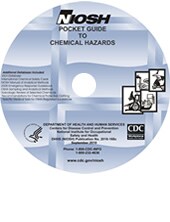
NIOSH Pocket Guide to Chemical Hazards Available for Free Download

The NIOSH Pocket Guide to Chemical Hazards (NPG) is intended as a source of general industrial hygiene information on several hundred chemicals/classes for workers, employers, and occupational health professionals. The NPG does not contain an analysis of all pertinent data, rather it presents key information and data in abbreviated or tabular form for chemicals or substance groupings (e.g. cyanides, fluorides, manganese compounds) that are found in the work environment. The information found in the NPG should help users recognize and control occupational chemical hazards.

Instructions for Downloading:
Download the NPG CD-Rom as a ISO image file and create a disc with CD-ROM authoring software.
The NPG ZIP file contains a condensed version of the NPG.
All non-Pocket Guide links were removed so that this set of files acts as a "stand-alone" database. These files can be used with a standard web browser or on some mobile devices.


  • 2010-168c.zip (245 MB) (requires WinZip or other unzipping software)
  • 2010-168c.exe(181 MB) (Self-extracting zip file for Windows)
  • 2010-168c.isoNIOSH publication number 2010-168c 
    (ISO Requires CD-Rom Authoring Software)

Kamis, 04 November 2010

NIOSH Supports Efforts To Ban Distracted Driving

The National Institute for Occupational Safety and Health (NIOSH) is following the lead of the US Department of Labor by encouraging employers to ban cell phone use while operating vehicles. An outright prohibition and supporting legislation may lead to the prohibition of workers' compensation benefits in many jurisdictions in the near future unless more global and radical action is taken to re-mediate this dangerous activity.

“While the basic distractions of cell phone calls or text messaging are similar whether one is driving on work time or on personal time, there are sources of distraction and incentives to engage in distracted driving behaviors that are unique to the workplace,” noted John Howard, M.D., Director of the National Institute for Occupational Safety and Health (NIOSH). “Someone driving on personal time has the leisure of waiting to return a friend’s call or text message. In these situations, minimizing risk is a matter of changing personal behavior and habits,” Dr. Howard said. “Workers, however, may be required or pressured by job demands to engage in distracted driving behaviors. Strong employer policies to curb the use of cell phones and in-vehicle technologies while driving are an important tool in creating a safe driving culture within an organization.”

Dr. Howard added, “NIOSH applauds the efforts of the Departments of Transportation and Labor to highlight the important role public and private employers can play in reducing distracted driving. We join them in urging employers to set policies to prohibit text messaging while driving. In addition, NIOSH will continue to work with our federal and other partners to support further efforts to reduce distracted driving in the workplace.”
.....
For over 3 decades the Law Offices of Jon L. Gelman 1.973.696.7900 jon@gelmans.com have been representing injured workers and their families who have suffered work related accident and injuries.

Related articles

Selasa, 31 Agustus 2010

Workplace Safety is the Most Important Issue This Labor Day

More than 85% of of the workers polled this Labor Day consider workplace safety as the most important issue. The study, "Public Attitudes Towards and Experiences with Workplace Safety," draws on dozens of surveys and polls conducted by NORC, one of the nation's leading academic survey operations, think tanks and public opinion firms. NORC’s analysis sought to gain a picture of Americans' experiences with workplace safety issues. The study was done for the Public Welfare Foundation, based in Washington, DC, which supports efforts to improve workers' rights.

Click here to read
the study.

For over 3 decades the Law Offices of Jon L. Gelman 1.973.696.7900 jon@gelmans.com  have been representing injured workers and their families who have suffered occupational exposures,

Sabtu, 28 Agustus 2010

There is No Good Asbestos -- It Is All a Killer


Chrysotile Asbestos and Mesothelioma

Richard A. Lemen
Assistant Surgeon General, U.S. Public Health Service (retired), National Institute for Occupational Safety and Health (retired), Canton, Georgia, E-mail: richard@ralemen.org
The Editor’s Summary for the article by Tse et al. (2010) stated the following:

Assuming an average latency of 42 years, the authors predict that incidence rates will peak in 2009 and that diagnoses will peak in 2014. However, they caution that ongoing use of chrysotile asbestos (which has been implicated but not conclusively established as a cause of mesothelioma) and the release of asbestos fibers from older buildings during demolition or renovation may slow the projected decline.
The statement concerning chrysotile asbestos being “implicated but not conclusively established as a cause of mesothelioma” is inconsistent with current scientific opinion. I refer you to the most recent evaluation by the International Agency for Research on Cancer in which Straif et al. (2009) stated,
Epidemiological evidence has increasingly shown an association of all forms of asbestos (chrysotile, crocidolite, amosite, tremolite, actinolite, and anthophyllite) with an increased risk of lung cancer and mesothelioma. Although the potency differences with respect to lung cancer or mesothelioma for fibres of various types and dimensions are debated, the fundamental conclusion is that all forms of asbestos are “carcinogenic to humans” (Group 1).
In addition, opinions such as that expressed in the Editor’s Summary are advanced only by scientists with prochrysotile industry bias.
When I wrote the draft for the first IARC Monograph on asbestos in 1976, which the expert committee accepted and published in 1977 as IARC Monograph Volume 14, a similar conclusion was stated: “Many pleural and peritoneal mesotheliomas have been observed after occupational exposure to crocidolite, amosite and chrysotile.” Since then—more than 30 years—science has not changed its opinion that all forms of asbestos, including chrysotile, cause mesothelioma.
In fact, in the article that is the subject of the Editor’s Summary, Tse et al. (2010) did not indicate that chrysotile is not a cause of mesothelioma; on the contrary, they stated the following:
Although the mesothelioma incidence is anticipated to decline in the coming decades, it may not decrease to background risk levels given that chrysotile consumption has not been banned under the current legislation and that secondary asbestos exposure from the environment will likely continue. Nevertheless, the hypotheses generated from this ecologic study need further confirmation by subsequent analytic studies. The present study provides supportive evidence for an immediate and global ban on asbestos use.
I hope that future Editor’s Summaries will reflect the conclusions of the article and not put forth statements that are not supported by mainstream science. I also support the conclusion of Tse e al. (2010) for “an immediate and global ban on asbestos use.”

References Top

  1. IARC 1977. Asbestos. IARC Monogr Eval Carcinog Risk Hum 14: 1–106. FIND THIS ARTICLE ONLINE
  2. Straif K, Benbrahim-Tallaa L, Baan R, Grosse Y, Secretan B, El Ghissassi F, et al. 2009. A review of human carcinogens—part C: metals, arsenic, dusts, and fibres. Lancet Oncol 10: 453. –454. FIND THIS ARTICLE ONLINE
  3. Tse LA, Yu IT, Goggins W, Clements M, Wang XR, Au JS, et al. 2010. Are current or future mesothelioma epidemics in Hong Kong the tragic legacy of uncontrolled use of asbestos in the past? Environ Health Perspect 118: 382–386. FIND THIS ARTICLE ONLINE
Click here to read more about asbestos related disease and claims for benefits. For over 3 decades the Law Offices of Jon L. Gelman 1.973.696.7900 jon@gelmans.com  have been representing injured workers and their families who have suffered asbestos related illnesses.

Enhanced by Zemanta