Tampilkan postingan dengan label NIOSH. Tampilkan semua postingan

Kamis, 20 Oktober 2011

Trench Safety a Focus of NIOSH

Working in a trench is a dangerous occupation, especially when working with old structures. NIOSH has refocussed on this concern this week and published Preventing Worker Death From Trench Cave-ins.

I was in New York City this week and watched two workers as they attempted to excavate on the street near Lincoln Center (see photo). One worker was digging shovel-by-shovel below ground as the worker above ground kept pounding the tops of large boards into the earth with the end of his shovel to act as walls to restrain the side from falling in. Pipes in NYC under the ground are old and many contain asbestos fiber. There were absolutely no pulmonary precautions being observed. 

Recently NJ Courts have held that trench accidents were not a mere fact of industrial life and were beyond intent of Act's immunity provision. A claim was permitted directly against the employer in addition to the workers' compensation action. Van Dunk v. Reckson Associates Realty Corp., 415 N.J.Super. 490 (N.J.Super.A.D. Aug 30, 2010), Certification Granted by 205 N.J. 81 (N.J. Jan 27, 2011).

"Workers who dig or excavate trenches are at risk of death if they enter an unprotected trench and the walls collapse. However, hazards associated with trench work and excavation are well defined and preventable. The OSHA standard for excavation and trenching, known as 29 CFR* 1926 Subpart P, describes the precautions needed for safe excavation work."


Jumat, 30 September 2011

How To Determine If A Substance Causes Cancer at Work

The National Institute for Occupational Safety and Health (NIOSH) is seeking public input to determine what substances cause cancer and at what level of occupational exposure.

"The National Institute for Occupational Safety and Health (NIOSH) of the Centers for Disease Control and Prevention (CDC) intends to review its approach to classifying carcinogens and establishing recommended exposure limits (RELs) for occupational exposures to hazards associated with cancer. As part of this effort, NIOSH is requesting initial input on these issues (including answers to the 5 questions in the following section), to be submitted to the NIOSH Docket number 240, for a comment period lasting through September 22, 2011. This information will be taken under consideration and used to inform NIOSH efforts to assess and document its carcinogen policy and REL policy regarding occupational hazards associated with cancer. NIOSH has also created a new NIOSH Cancer and REL Policy Web Topic Page [see http://www.cdc.gov/niosh/topics/cancer/policy.html] to provide additional details about this effort and progress updates."


"NIOSH is announcing a Request for Information on key issues identified and associated with the NIOSH Carcinogen and REL policies. Special emphasis will be placed on consideration of technical and scientific issues with the current NIOSH Cancer and REL Policies that require further examination including the following:Show citation box

(1) Should there explicitly be a carcinogen policy as opposed to a broader policy on toxicant identification and classification (e.g.carcinogens, reproductive hazards, neurotoxic agents)?Show citation box

(2) What evidence should form the basis for determining that substances are carcinogens? How should these criteria correspond to nomenclature and categorizations (e.g., known, reasonably anticipated,etc.)?Show citation box

(3) Should 1 in 1,000 working lifetime risk (for persons occupationally exposed) be the target level for a recommended exposure limit (REL) for carcinogens or should lower targets be considered?Show citation box

(4) In establishing NIOSH RELs, how should the phrase “to the extent feasible” (defined in the 1995 NIOSH Recommended Exposure Limit Policy) be interpreted and applied?Show citation box

(5) In the absence of data, what uncertainties or assumptions areappropriate for use in the development of RELs? What is the utility of a standard ”action level” (i.e., an exposure limit set below the REL typically used to trigger risk management actions) and how should it be set? How should NIOSH address worker exposure to complex mixtures?

Public Comment Period: Comments must be received by September 22, 2011.

The concept of a compensable industrial disease has developed only recently and its acceptance has lagged far behind that of industrial accidents. The original Workers' Compensation Acts, as promulgated from the year 1911 forward by many of the states, did not provide for the recognition of occupational illness and disease as compensable events. As demands have been placed upon the medical system to treat and to prevent occupational illness, the legal system, under social, economic, and political pressure, has sought to provide a remedy for the thousands of injured workers who have suffered and who are continuing to suffer from occupational illness and disease. 

Minggu, 24 April 2011

NIOSH Correction: Asbestos is A Know Carcinogen

NIOSH has corrected it originally released report last month and has now inserted the text:


"NIOSH has determined that exposure to asbestos fibers causes cancer and asbestosis in humans and recommends that exposures be reduced to the lowest feasible concentration."


For more about this correction see The Pump Handle article.


Related articles

Rabu, 05 Januari 2011

NIOSH Proposes New Digital Classification for Pneumoconiosis

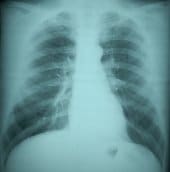
Monitoring the health of individuals involved in dusty work is intended to provide assurance to the worker that ongoing exposure controls are adequate. Recognition of minor health abnormalities serves as an early warning to both workers and managers when there is need for more effective measures to prevent work-related impairment and disability. Since 1970, NIOSH and other organizations have successfully applied traditional film screen chest radiography, interpreted using the ILO International Classification of Radiographs of Pneumoconiosis, toward these objectives. 

Imaging of interstitial lung diseases such as the pneumoconiosis represents one of the most difficult challenges in diagnostic radiology, and comprehensive attention to technological, methodological, and human factors is required to assure that the image quality and interpretation are satisfactory for achieving early disease detection. 

This NIOSH Guideline is based upon accepted contemporary professional recommendations, and provides technical and operational guidance for radiographic facilities and physician readers who obtain digital chest radiographs for the evaluation of pneumoconiosis. The intent is to assure that the recognition of pneumoconiosis using digitally-acquired chest radiographs is at least as safe and effective as traditional film screen radiography. The Guideline should not be considered a mandate for medical practice; however participating practitioners and facilities who deviate from the specifications should have a sound medical rationale for alternative approaches.

Kamis, 28 Oktober 2010

Workers Compensation and Nanotechnology - The New Frontier

NIOSH research has revealed that breathing nanoparticles may result in damaging health effects.

"Nanotechnology has the potential to revolutionize countless products, create computers smaller and faster than once could be imagined, and fight diseases such as cancer. According to the Project on Emerging Nanotechnology, by the summer of 2009 there were 1,015 consumer products using nanotechnology. That represents nearly a 19-fold increase over the 54 products listed in 2005. Nanotechnology involves the manipulation of matter at a near-atomic scale. Nanoparticles measure from 1 to 100 nanometers in size, with 1 billion nanometers forming a meter. For comparison, a billion inches would nearly circle the Earth 2 times."
  • A 2004 survey estimatedthat nearly 25,000 U.S. workers were employed at businesses that exclusively produced nanotechnology products.
  • Nanoparticles can enter the body through many routes including inhalation, swallowing, ingestion, and absorption through the skin.
  • Nanotechnology may present health risks but it can also be used to protect workers. New respirator designs, for instance, use nanotechnology to create more effective filters to block harmful substances.
Authors of Inhalation Versus Aspiration of Single-Walled Carbon Nanotubes in C57BL/6 Mice: Inflammation, Fibrosis, Oxidative Stress, and Mutagenesis—Anna Shvedova, Elena Kisin, Ashley Murray, Victor Johnson, Olga Gorelik, Sivaram Arepalli, Ann Hubbs, Robert Mercer, Phouthone Keohavong, Nancy Sussman, J. Jin, J. Yin, Samuel Stone, The-hsun Chen, Gregory Deye, Andrew Maynard, Vince Castranova, Paul Baron, and Valerian Kagan; Health Effects Laboratory Division; NIOSH—received the 2009 Alice Hamilton Award in the Biological Sciences category.
.....
For over 3 decades the Law Offices of Jon L. Gelman 1.973.696.7900 jon@gelmans.com have been representing injured workers and their families who have suffered work related accident and injuries.

Kamis, 21 Oktober 2010

Opportunities, Challenges in Use of Workers’ Comp Data Are Examined in NIOSH Workshop Proceedings Report

Opportunities for maximizing the use of workers’ compensation data for occupational safety and health surveillance and research - and challenges that researchers face in exploring those opportunities - are examined in a report of proceedings now available both electronically and in paper copy from the National Institute for Occupational Safety and Health (NIOSH).
"Use of Workers’ Compensation Data for Prevention of Occupational Injuries and Illnesses: Proceedings from September 2009 Workshop," DHHS (NIOSH) Publication No. 2010-152, is posted at http://www.cdc.gov/niosh/docs/2010-152/pdfs/2010-152.pdf Adobe PDF file. The 2009 workshop was co-sponsored by NIOSH, the Bureau of Labor Statistics, the National Council for Compensation Insurance, and the Washington State Department of Labor and Industries’ Safety and Health Assessment and Research for Prevention Program.
"As researchers and practitioners seek innovative means to improve the surveillance of occupational injuries and illnesses, workers’ compensation data offer a potentially useful answer - but the limitations and uncertainties of those data must be addressed," said NIOSH Director John Howard, M.D. "We are pleased to offer these proceedings as a unique resource for assessing current uses of workers’ compensation information for health surveillance, suggesting new uses, and engaging the uncertainties that we face in doing so."
Although workers’ compensation programs record cases of occupational injury and illness that have already occurred, they generate data that may also serve useful purposes for preventing future injuries and illnesses. Those data may provide insights into the severity of cases, recent trends, and emerging concerns that other data sources may not.
However, several factors pose difficulties for using workers’ compensation records as a surveillance and research resource. Because different states have different rules on compensability and because data are not always coded according to a standard system, it may be difficult to harmonize and interpret data nationally. Where larger data sets exist, they generally are proprietary, and access is restricted beyond the purposes for which they were originally established.
The proceedings include more than 30 prepared presentations and a summary from the workshop. Nearly 80 participants from federal and state agencies, labor, academia, and the insurance industry made presentations and engaged in discussions.